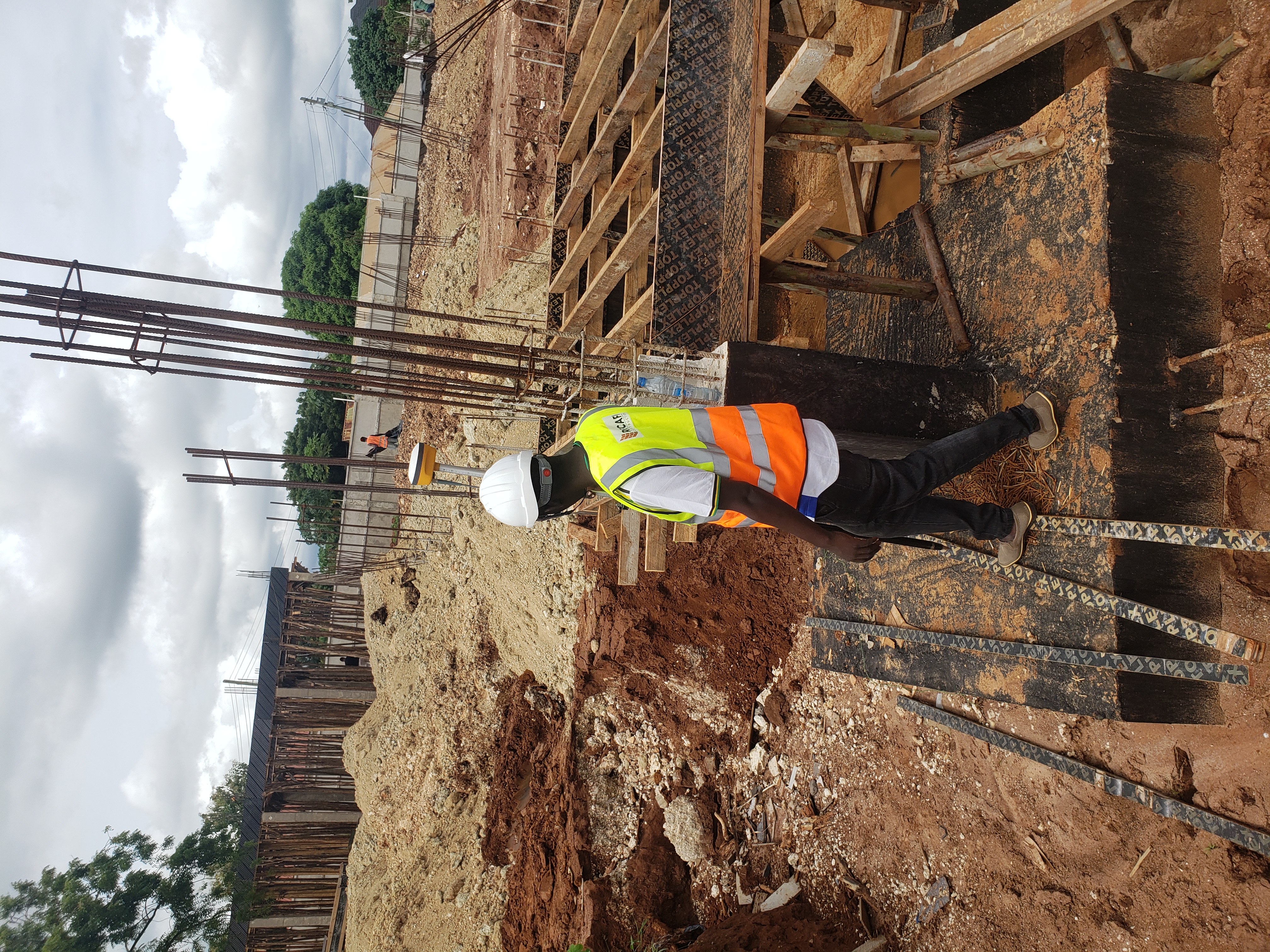
“The survey team completed setting out operations and performed comprehensive site data verification and accuracy checks at the proposed Rehema School construction site. All control points were established and cross-checked, and measurements were validated against the design drawings. Any minor discrepancies identified were reviewed and corrected to ensure conformity with project requirements.”
For a contractor, setting out and verifying site data isn’t just a routine survey step—it directly affects cost, quality, and risk on the entire project.
Accuracy prevents costly mistakes.
Correct setting out ensures that buildings, foundations, and services are placed exactly where the design intends. Even small errors can lead to misaligned structures, rework, or demolition, all of which increase costs and delay the schedule.
Reduces construction risk.
Verified site data (coordinates, levels, boundaries) gives contractors confidence that they’re building on the right footprint and elevations. This helps avoid disputes over encroachment, wrong positioning, or incorrect levels.
Improves efficiency and workflow.
When survey data is accurate, site teams can proceed smoothly without constant adjustments. Equipment, materials, and labor are used more efficiently because there’s less need for corrections.
Supports quality control.
Accurate setting out is the foundation of quality construction. It ensures that all structural elements align with design specifications, which is critical for safety and long-term performance.
Protects against legal and contractual issues.
Incorrect positioning or levels can lead to claims, penalties, or conflicts with clients and consultants. Verified data helps contractors demonstrate compliance with drawings and contract requirements.
Better coordination with other trades.
Precise layout ensures that different components (foundations, columns, utilities) fit together properly, reducing clashes during construction.